Showing posts with label Chinese New Year. Show all posts

Tuesday, February 1, 2011

This Brings Out the Animal in Me...Critters in Balkan Folk Music


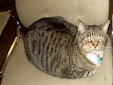
(rabbit photo from Wikipedia; cat photo is of "Fluffy" by K.D. Brown)

Happy Year of the Rabbit!

The Chinese New Year begins on February 3rd, 2011. The first New Moon in late January/early February starts another cycle in the Chinese Zodiac.

For those of you who follow astrology, the Chinese Zodiac is different than the Western, in that it consists entirely of animals. In the Western Zodiac, there is one inanimate object, Libra, the Scales, and several human figures: Virgo (the virgin), Sagittarius (half-human and half horse, and Aquarius, either a man or woman pouring water.

The word "zodiac" means a "circle of animals", and is of Greek origin.

Today's topic will be songs and dances about critters in Balkan folklore. Folk songs and folk tales often use animals to describe human qualities, both good and bad (without offending the humans!)

The first dance-song, from Macedonia, is about a rabbit, in honor of the Chinese New Year. The song is Zajko Kokorajko, the dance is called Arap.


Mr. Rabbit wanted to get married, but little did he know about the surprise that awaited him :) You can find the lyrics here: http://www.dunav.org.il/lyrics/arap_zajko_kokorajko.html

Foxes are wily, clever creatures, and fortunately the rabbit in our story knew what the fox had in store for him before it was too late.

The next video is a dance from Romania called Vulpita (little fox). I've never seen a fox dancing, but I'm sure if they do it's fast.....


One of my favorite animals is the cat. One thing cats like to do is steal food, and Fatso, my current kitty is no exception. As a result, he weighs over 20 pounds, and he refuses to go on a diet. He thinks our food tastes better than his, this explains why he jumps on the table when nobody's looking.

The next dance is Ripna Maca, about a cat who steals sausage, much to the annoyance of his humans. Version one is from Serbia.


The lyrics are here: http://www.dunav.org.il/lyrics/ripna_maca.html

The priest's wife in the song didn't take too kindly to the cat stealing food. In my house it's not a big deal because Fatso is spoiled. Besides, cats do whatever they damn well please, and there's no stopping them.

Version two is from Bulgaria.


May the year of the Rabbit bring everyone health and happiness!

Creative Commons License
This work is licensed under a Creative Commons Attribution-Noncommercial-No Derivative Works 3.0 United States License.

Friday, January 28, 2011

Dreaming of Spring in the Middle of Winter: Flowers in Bulgarian Folklore


Living in the deep freeze is not easy. The temperatures have been so cold recently that you can throw boiling water from a container and it will freeze before hitting the ground.


Not only has it been extremely cold, we have been doused with large quantities of snow every week! According to the statistics for this region, we have had at least 40 inches (a little over a meter) of snow during the month of January alone.

Since I hate winter and can't wait for it to end, today's post is about flowers, springtime and Bulgarian folklore. I am dreaming of spring in the middle of winter.

Here's one of my favorite folk-pop songs from Bulgaria, Biala Roza (white rose). The dance is a Devetorka. A white rose is beautiful and symbolizes innocence, but watch out for those thorns!


Are any of you old enough to remember the "flower children" from the 1960's? I think the Bulgarians were the original flower children judging from the number of videos I've seen with them wearing flowers in their hair. This little girl has one of the most amazing voices I've ever heard. She has flowers in her hair, and is wearing a traditional Bulgarian folk costume. And it's springtime....


Here is a dance-song called Karamfil (Carnation.) According to the song, the red carnation is the symbol of the rebel (haiduk) who leads the struggle against Ottoman Turkish rule, the mother of the partisans and the leader of the Slavs. He is a true son of the Balkans, born in the Valley of the Roses. For some reason, the Chinese love Bulgarian folk music. Must be that connection they have with the ancient Bulgarian calendar, which is the same as the Chinese zodiac!


The Year of the Rabbit is just around the corner. Click here to read about the ancient Bulgarian calendar and the Chinese zodiac:
http://www.helium.com/items/1512507-ancient-bulgarian-calendar-and-chinese-zodiac

The rose is the national flower and a symbol of Bulgaria. In spring, the Valley of the Roses comes alive with the color and fragrance of millions of flowers. The Rose Festival is held in June. Rose oil from Bulgaria is exported all over the world, to be used as an ingredient for perfumes. In this video, girls in traditional dress wear flowers in their hair. They're dancing a Pravo Horo, which is the one of the most popular dances in Bulgaria.


For more on the Rose Festival, click here:
http://www.rose-festival.com/valley-roses.shtml

Unfortunately, there's more than 6 more weeks of winter left.....but I can dream, can't I?

Creative Commons License
This work is licensed under a Creative Commons Attribution-Noncommercial-No Derivative Works 3.0 United States License.